 English
 Español
 Português
 русский
 Français
 日本語
 Deutsch
 tiếng Việt
 Italiano
 Nederlands
 ภาษาไทย
 Polski
 한국어
 Svenska
 magyar
 Malay
 বাংলা ভাষার
 Dansk
 Suomi
 हिन्दी


How Does a Licensed JCB Kids Electric Ride-On Factory Truck Deliver Safe and Engaging Play Experiences?
Article Summary
A Licensed JCB Kids Electric Ride-On Factory Truck is designed to bring construction-themed play into children's everyday activities. Its appeal comes from recognizable JCB styling, an electric driving system, child-friendly controls, and optional interactive features such as parental remote control, working attachments, lights, and sounds.
This guide explains how the vehicle works, which features influence its performance, what safety considerations buyers should evaluate, and how B2B purchasers can assess manufacturing quality before placing bulk orders. It also covers customization, packaging, quality inspection, and supplier selection to help international buyers make informed purchasing decisions.
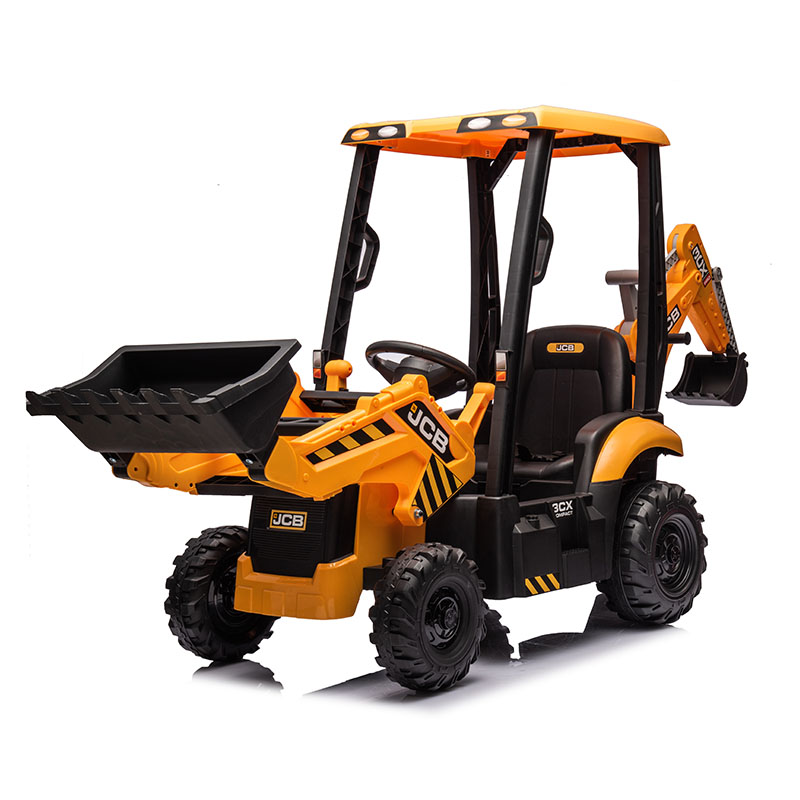
Table of Contents
- Understanding the Licensed JCB Kids Electric Ride-On Factory Truck
- How Does the Electric Ride-On Truck Work?
- Which Features Make the Truck Attractive to Children?
- How Does the Design Support Children's Safety?
- How Do Battery and Motor Systems Affect Performance?
- How Does Construction-Themed Play Support Child Development?
- What Should B2B Buyers Check Before Purchasing?
- How Does Manufacturing Quality Affect Product Reliability?
- How Can Buyers Customize Ride-On Truck Products?
- How Can Packaging and Shipping Be Optimized?
- How Can Buyers Choose a Reliable Supplier?
- Frequently Asked Questions
- Conclusion
1. Understanding the Licensed JCB Kids Electric Ride-On Factory Truck
Construction vehicles have a special appeal for young children. Excavators, loaders, forklifts, and factory trucks represent powerful machines used in real working environments. Their recognizable shapes, functional attachments, and bright industrial colors make them interesting subjects for imaginative play.
A Licensed JCB Kids Electric Ride-On Factory Truck brings this construction-inspired experience into a child-sized vehicle. It combines the visual identity of JCB construction equipment with an electric ride-on platform designed for recreational use.
Unlike ordinary ride-on cars that mainly focus on transportation-style play, construction-themed ride-on vehicles can introduce additional interactive experiences. Depending on the specific model, these may include:
- Recognizable JCB styling: Yellow-and-black exterior details inspired by construction machinery.
- Electric driving: A rechargeable battery powers the vehicle's motor system.
- Interactive controls: A steering wheel, foot pedal, and forward or reverse functions.
- Construction attachments: Selected models may include a front loader, forklift mechanism, or other movable accessories.
- Parental remote control: Some versions allow adults to control the vehicle remotely.
- Entertainment features: Optional lights, sounds, horns, and music functions.
Important for buyers: The exact configuration depends on the licensed model and supplier specifications. Buyers should verify the authorized branding, product functions, and included accessories rather than assuming every JCB ride-on truck has identical features.
For toy wholesalers and distributors, this product category offers an opportunity to serve families looking for more engaging alternatives to conventional ride-on vehicles. It can also complement a broader assortment of outdoor toys, battery-powered vehicles, and construction-themed products.
2. How Does the Electric Ride-On Truck Work?
An electric ride-on truck operates through a coordinated system involving a rechargeable battery, electric motors, driving controls, wheels, and an electronic control unit. Each component contributes to the vehicle's movement and overall riding experience.
2.1 Rechargeable Battery System
The battery stores electrical energy and supplies power to the motors. Common ride-on toy configurations include 6V, 12V, and 24V systems, although the appropriate voltage depends on vehicle size, motor configuration, intended age group, and design requirements.
A rechargeable battery allows the vehicle to be used repeatedly without disposable batteries for propulsion. Buyers should check the battery type, capacity, charging time, replacement availability, and recommended charging procedure.
2.2 Electric Motor and Transmission
The electric motor converts electrical energy into mechanical movement. Depending on the design, the vehicle may use one or more motors to drive its wheels.
A dual-motor configuration can distribute driving power across two driven wheels. However, the actual driving performance also depends on vehicle weight, gear design, tire traction, battery condition, and surface conditions.
2.3 Driving Controls
Most electric ride-on vehicles use straightforward controls to help children operate them. A typical control arrangement may include:
- A steering wheel for changing direction.
- A foot pedal or other acceleration control.
- A forward and reverse selector.
- A power switch or start button.
- Optional parental remote control for adult supervision.
2.4 Electronic Control System
The electronic control unit coordinates motor operation and user inputs. Some models also support gradual acceleration, selectable speed settings, lighting, and sound effects.
A well-designed control system helps create smoother operation and reduces sudden changes in movement. For younger users, this is particularly important because predictable vehicle responses make supervised riding easier to manage.
3. Which Features Make the Truck Attractive to Children?
Product differentiation is important in the competitive ride-on toy market. A vehicle needs more than an attractive exterior to create a satisfying play experience. Its functions, comfort, and interactive details all contribute to its appeal.
3.1 Authentic Construction-Inspired Appearance
The JCB visual identity is one of the defining characteristics of a licensed construction-themed ride-on vehicle. Its familiar yellow-and-black styling helps distinguish it from ordinary toy cars.
For parents, the recognizable construction equipment appearance can make the vehicle more appealing as a special gift. For retailers, branded styling can also help products stand out in a crowded toy category.
3.2 Functional Construction Attachments
Some construction-themed ride-on models incorporate movable attachments that introduce additional play activities. Depending on the model, these can include:
- Front loader buckets for pretend material handling.
- Forklift-style lifting mechanisms for lightweight toy objects.
- Rear digging attachments for construction role-play.
- Detachable accessories or trailers for carrying toys.
These functions allow children to create different play scenarios instead of simply driving forward and backward. Buyers should check whether attachments are manually operated or electrically powered and confirm their permitted loads and operating instructions.
3.3 Lights, Sounds, and Interactive Details
Interactive details can make the riding experience more engaging. Depending on the configuration, manufacturers may offer:
- Working headlights and decorative lighting.
- Horn and engine sound effects.
- Music playback functions.
- Dashboard-style buttons and switches.
- Battery level indicators.
These features should be evaluated according to their reliability, ease of use, and actual value to the target market. More electronic functions do not automatically mean a better product.
3.4 Comfortable Seating and Practical Details
A suitable seat, accessible controls, and sufficient legroom help improve the riding experience. Depending on the model, additional features may include a seat belt, backrest, non-slip foot area, and durable wheels.
For B2B buyers, the most valuable configuration is one that balances entertainment, ease of use, durability, and an appropriate selling price.
4. How Does the Design Support Children's Safety?
Safety is one of the most important considerations when purchasing an electric ride-on toy. Since the product is designed for children, buyers should evaluate its mechanical construction, electrical system, operating controls, and instructions before selecting a model.
4.1 Parental Remote Control
Some ride-on trucks include a 2.4GHz remote control that allows an adult to guide or stop the vehicle. This feature can be especially useful when children are still learning how to operate the steering wheel and accelerator.
However, remote control availability does not replace adult supervision. Buyers should verify the remote's actual functions, operating range, emergency stop capability, and compatibility with the specific model.
4.2 Gradual Start and Stop Functions
A gradual acceleration function helps reduce sudden movement when the vehicle starts. A controlled stopping response can also make operation more predictable.
These functions are useful design considerations for younger riders, although their actual effectiveness should be verified through product testing.
4.3 Seat Belts and Stable Construction
Depending on the model, a seat belt can help keep the rider positioned correctly during normal operation. A stable chassis, suitable wheel spacing, and appropriate weight distribution also contribute to vehicle stability.
Buyers should pay attention to:
- Vehicle stability during normal turns.
- Secure seat and steering wheel installation.
- Properly fitted wheels and axles.
- Accessible edges and small detachable components.
- Secure battery compartments and electrical connections.
- Appropriate load capacity and age recommendations.
4.4 Battery and Electrical Protection
Battery-powered toys require appropriate electrical protection. The battery compartment should be secure, wiring should be properly insulated, and charging components should be compatible with the specified battery system.
Buyers should request documentation covering battery specifications, charger compatibility, electrical safety testing, and relevant product warnings.
4.5 Age Recommendations and Supervision
Age grading should reflect the vehicle's design, control complexity, dimensions, and safety assessment. A product advertised for a particular age range should not automatically be assumed suitable for every child within that range.
Children should ride only in suitable areas, away from public roads, steep slopes, swimming pools, and vehicle traffic. Adults should follow the manufacturer's instructions and supervise children during use.
Safety reminder: A product's safety cannot be established by its appearance or feature list alone. Importers should obtain model-specific test reports and verify applicable requirements in every destination market.
5. How Do Battery and Motor Systems Affect Performance?
Battery capacity and motor configuration directly influence the operating characteristics of an electric ride-on truck. Selecting the right combination helps manufacturers balance driving performance, operating time, product weight, and cost.
5.1 Understanding Battery Voltage and Capacity
Voltage and ampere-hour capacity describe different aspects of a battery. Voltage relates to the electrical system, while ampere-hour capacity indicates how much electrical charge the battery can store under specified conditions.
For example, a 12V battery and a 24V battery belong to different electrical system configurations. A higher voltage does not necessarily guarantee longer operating time because motor power consumption, battery capacity, terrain, and rider weight also matter.
5.2 Motor Configuration
Motor selection should match the vehicle's size and intended use. A compact ride-on vehicle may use a different motor arrangement from a larger construction-themed truck with additional mechanical functions.
When comparing models, buyers should examine motor quantity, rated power, gearbox construction, wheel drive arrangement, and the manufacturer's tested performance data.
5.3 Typical Technical Specifications to Compare
The following table provides a purchasing reference for evaluating common ride-on vehicle specifications. These are illustrative configurations rather than confirmed specifications for every licensed JCB model.
| Specification | What Buyers Should Check | Why It Matters |
|---|---|---|
| Battery voltage | 6V, 12V, or 24V, according to the model | Determines electrical system compatibility |
| Battery capacity | Ah rating and battery type | Helps evaluate potential operating duration |
| Motor system | Motor quantity and rated power | Influences driving performance |
| Driving speed | Verified low and high speed settings | Supports age-appropriate product selection |
| Remote control | Control functions and emergency stop | Provides additional parental supervision |
| Maximum load | Manufacturer-approved weight limit | Helps prevent overloading |
| Charging time | Specified charging duration | Supports proper daily use and maintenance |
| Operating time | Tested duration under stated conditions | Sets realistic customer expectations |
5.4 Choosing Wheels for Different Surfaces
Wheel construction influences traction, noise, comfort, and wear resistance. Plastic wheels, EVA wheels, and other wheel materials may be used depending on the product design.
Buyers should evaluate the intended riding surface, including indoor flooring, paved outdoor areas, and other manufacturer-approved flat surfaces. No wheel type should be assumed suitable for every terrain.
6. How Does Construction-Themed Play Support Child Development?
Beyond entertainment, construction-themed ride-on vehicles can create opportunities for imaginative activities and hands-on exploration.
6.1 Encouraging Imaginative Role-Play
Children can pretend to operate a construction site, transport toys, move lightweight objects, or complete simple building-themed tasks. These activities allow them to create stories and explore different roles.
6.2 Developing Basic Coordination
Operating a steering wheel and using driving controls involves coordinating hand and foot movements. With appropriate supervision and age suitability, these activities can provide opportunities to practice basic motor coordination.
6.3 Promoting Parent-Child Interaction
Parents can participate by creating simple play scenarios, explaining how construction vehicles work, and helping children understand safe operating habits.
6.4 Introducing Construction Equipment Concepts
A construction-themed ride-on toy can introduce children to familiar machine shapes and basic functions. For example, a front loader can inspire discussions about moving materials, while a forklift-style attachment can introduce the idea of lifting and transporting objects.
These experiences are recreational rather than professional equipment training, but they can make playtime more varied and engaging.
7. What Should B2B Buyers Check Before Purchasing?
For wholesalers, importers, and retailers, purchasing a Licensed JCB Kids Electric Ride-On Factory Truck requires more than comparing product photographs and unit prices. A successful sourcing decision should consider licensing, technical specifications, compliance, production capacity, and after-sales support.
7.1 Verify Brand Licensing Authorization
When a product is marketed as officially licensed JCB merchandise, buyers should request evidence that the manufacturer or supplier is authorized to use the relevant trademarks and designs.
Important documents may include:
- Valid licensing authorization or relevant licensing confirmation.
- Approved product artwork and branding details.
- Documentation identifying the authorized product model.
- Applicable restrictions on territories and distribution channels.
Trademark authorization and product safety compliance are separate matters. A licensed product still needs to meet the applicable safety requirements of its destination market.
7.2 Evaluate Product Specifications
Before requesting a quotation, prepare a detailed specification list covering battery configuration, motor power, speed, dimensions, maximum load, materials, control functions, and included accessories.
Request an actual product specification sheet rather than relying only on marketing descriptions. This helps avoid misunderstandings between the quoted product and the delivered goods.
7.3 Confirm Destination-Market Requirements
Different markets have different requirements for children's products and battery-powered toys. Depending on the destination, buyers may need to review requirements such as:
- United States: Applicable CPSC requirements, ASTM F963 toy safety provisions, CPSIA requirements, and relevant certification and testing obligations.
- European Union: Applicable toy safety legislation, relevant EN 71 standards, electrical requirements where applicable, and other market-specific obligations.
- United Kingdom: Applicable toy safety and product conformity requirements for the intended market.
- Other markets: Local requirements covering children's toys, electrical products, batteries, labeling, and import documentation.
Applicable standards depend on the specific product, its features, and the destination market. Buyers should work with qualified testing laboratories or compliance professionals to identify the correct requirements and confirm that the supplied reports cover the actual model.
7.4 Assess the Supplier's Production Capability
For bulk orders, manufacturing consistency is just as important as the initial sample. Buyers should understand how the supplier manages raw materials, assembly procedures, component sourcing, testing, and finished-product inspection.
7.5 Calculate the Total Purchasing Cost
The lowest unit quotation does not always represent the best purchasing decision. Buyers should consider the complete landed cost, including:
- Product unit price.
- Packaging and labeling costs.
- Battery and accessory costs.
- Inspection and testing expenses.
- Shipping and insurance.
- Import duties and destination charges.
- Potential warranty and replacement costs.
8. How Does Manufacturing Quality Affect Product Reliability?
Manufacturing quality has a direct influence on product consistency, customer satisfaction, and after-sales performance. An electric ride-on truck contains multiple mechanical, electrical, and plastic components that must work together correctly.
8.1 Plastic Material and Exterior Components
Plastic body panels, seats, dashboards, and accessories should be checked for consistent appearance, suitable material properties, secure assembly, and acceptable surface finish.
Color consistency is particularly important for licensed products because the exterior design is closely connected with brand recognition.
8.2 Motor and Gearbox Assembly
Motors and gearboxes should be installed correctly and checked for abnormal noise, inconsistent movement, and connection problems. Gear engagement and wheel movement should be verified during functional testing.
8.3 Electrical Wiring and Connections
Electrical assemblies should be inspected for secure connectors, correct wiring, suitable insulation, and proper component installation. Battery and charger compatibility should also be confirmed.
8.4 Functional Testing Before Shipment
Before products are packed, manufacturers should implement suitable inspection procedures. Depending on the model and agreed quality plan, checks may include:
- Power-on and startup tests.
- Forward and reverse operation.
- Steering and acceleration response.
- Remote control operation where included.
- Lighting and sound functions.
- Battery charging and electrical checks.
- Seat belt, wheels, and attachment installation.
- Exterior appearance and packaging inspection.
Documented inspection results help buyers assess whether production units match the approved sample and agreed specifications.
9. How Can Buyers Customize Ride-On Truck Products?
Customization can help distributors and retailers adapt a product range to their target customers. However, when a vehicle uses a licensed brand, customization must remain within the applicable authorization terms.
9.1 Product Configuration
Depending on the available model and licensing conditions, buyers may discuss different technical configurations, such as battery capacity, motor arrangements, remote control functions, and optional accessories.
9.2 Color and Appearance
Licensed products generally need to follow approved brand guidelines. Buyers should confirm which exterior colors, decals, logo placements, and design changes are permitted before requesting modifications.
9.3 Packaging and Branding
Retail packaging plays an important role in product presentation. Buyers may need to confirm carton artwork, product labels, warning information, instruction manuals, barcodes, and language requirements.
9.4 Market-Specific Accessories
Accessories may be selected according to the needs of different distribution channels. Examples include replacement batteries, compatible chargers, remote controls, and spare components.
All modifications should be reviewed for technical compatibility, licensing restrictions, and compliance implications before mass production.
10. How Can Packaging and Shipping Be Optimized?
Ride-on trucks are relatively large products compared with conventional toys. Their dimensions and packaging configuration can significantly affect storage, container loading, and international transportation costs.
10.1 Evaluate Carton Dimensions
Buyers should request the assembled product dimensions, carton dimensions, gross weight, net weight, and packaging volume. These details are necessary for calculating shipping requirements.
10.2 Protect Key Components
Packaging should protect vulnerable parts such as plastic body panels, wheels, mirrors, attachments, and electronic components. Suitable internal supports and protective materials can help reduce damage during transportation.
10.3 Check Assembly Requirements
Some ride-on vehicles are shipped partially assembled to reduce packaging volume. Buyers should confirm which parts require installation and whether the carton includes the necessary tools, fasteners, and assembly instructions.
10.4 Prepare Complete Shipping Documents
International orders may require commercial invoices, packing lists, shipping documents, product identification details, and relevant compliance documents. Battery shipments may also require applicable transportation documentation based on battery type and shipping method.
Clear communication between the supplier, buyer, freight forwarder, and customs broker helps reduce avoidable shipping delays.
11. How Can Buyers Choose a Reliable Supplier?
Choosing the right supplier is essential for building a stable product supply chain. A dependable partner should provide more than an attractive quotation. Buyers should assess the supplier's technical knowledge, communication efficiency, production management, documentation, and ability to fulfill agreed requirements.
11.1 Check Company Background
Review the supplier's business information, product portfolio, manufacturing experience, and export capabilities. Where possible, arrange a factory audit or third-party assessment.
11.2 Request Samples
Samples allow buyers to inspect actual product quality before placing a bulk order. Pay attention to exterior finish, material quality, driving controls, battery operation, remote control functions, and assembly details.
11.3 Confirm Licensing and Compliance Documents
Ask for model-specific licensing evidence and relevant safety documentation. Check that document details, model numbers, and product configurations correspond to the goods being purchased.
11.4 Discuss Production Lead Time
Production lead time can be affected by raw material availability, component sourcing, order quantity, licensing approvals, and packaging requirements. Buyers should confirm the production schedule and shipment deadline in writing.
11.5 Evaluate After-Sales Support
Electric ride-on toys contain replaceable and serviceable components. A reliable supplier should be able to explain the warranty policy, spare parts availability, troubleshooting procedures, and process for handling defective products.
Buyer Checklist Before Placing a Bulk Order
- Verify the JCB licensing authorization.
- Obtain complete model specifications.
- Confirm the target market's safety requirements.
- Review applicable test reports and certificates.
- Inspect and approve a production sample.
- Confirm battery, motor, and charger configurations.
- Check packaging dimensions and shipping weight.
- Agree on MOQ, unit price, and payment terms.
- Confirm production lead time and inspection arrangements.
- Clarify warranty and spare parts support.
12. Frequently Asked Questions
Q1: What is a Licensed JCB Kids Electric Ride-On Factory Truck?
It is a battery-powered children's ride-on vehicle featuring an authorized JCB-branded construction-inspired design. Depending on the model, it may include electric driving, steering controls, parental remote control, interactive sounds, and functional construction-themed attachments.
Q2: What age group is suitable for a JCB electric ride-on truck?
The recommended age range depends on the specific model, vehicle dimensions, control system, and safety assessment. Buyers should follow the manufacturer's age grading and weight-limit instructions rather than applying one age recommendation to every model.
Q3: Does every licensed JCB ride-on truck include a remote control?
No. Remote control is a model-dependent feature. Buyers should confirm whether the selected configuration includes a parental remote, which functions it supports, and whether it provides an emergency stop function.
Q4: How long can a children's electric ride-on truck operate after charging?
Operating time depends on battery capacity, motor power, rider weight, terrain, speed settings, and driving habits. Buyers should request tested operating-time information under clearly stated conditions instead of relying on a general estimate.
Q5: What battery configurations are commonly used?
Electric ride-on toys may use 6V, 12V, or 24V battery systems. The appropriate configuration depends on the vehicle design and motor requirements. Battery voltage, capacity, charger compatibility, and replacement availability should all be confirmed.
Q6: What safety features should buyers look for?
Important considerations include suitable speed settings, gradual acceleration, stable construction, secure battery compartments, appropriate electrical protection, and model-dependent features such as seat belts and parental remote control. Buyers should also verify applicable safety test documentation.
Q7: Can the construction attachments actually move?
Some models have movable loader buckets, forklift attachments, or other interactive mechanisms. Their operating method and permitted load vary by model. Buyers should confirm whether each attachment is manual or electrically powered and follow the manufacturer's operating instructions.
Q8: Can wholesalers purchase customized JCB ride-on trucks?
Customization possibilities depend on the supplier's production capabilities and the applicable licensing agreement. Battery configuration, accessories, packaging, and other permitted details may be discussed. Changes to protected brand elements require appropriate authorization.
Q9: What documents should importers request?
Depending on the destination market, buyers may need licensing authorization, model specifications, applicable safety test reports, certificates or declarations where required, battery documentation, user manuals, and shipping documents. All documents should correspond to the actual product model.
Q10: Why should buyers request a sample before bulk purchasing?
A sample allows buyers to check actual product appearance, assembly quality, driving functions, battery performance, included accessories, and packaging. It also provides a reference for comparing subsequent mass production.
Q11: What affects the wholesale price of a JCB kids electric ride-on truck?
The price may depend on battery capacity, motor configuration, vehicle size, functional attachments, electronic features, packaging, order quantity, and licensing arrangements. A detailed specification comparison is necessary to evaluate quotations fairly.
Q12: What should distributors consider when selecting a ride-on truck supplier?
Distributors should evaluate licensing authorization, product quality, safety documentation, manufacturing consistency, production capacity, delivery schedules, spare parts availability, and after-sales support. A supplier's ability to provide clear and verifiable product information is also important.
13. Conclusion
A Licensed JCB Kids Electric Ride-On Factory Truck combines construction-inspired styling with battery-powered mobility and interactive play features. Its value comes from the overall product experience, including recognizable design, practical controls, suitable performance, comfortable construction, and appropriate safety considerations.
For international wholesalers, importers, and toy distributors, successful purchasing depends on looking beyond the product's appearance. Licensing authorization, technical specifications, market compliance, manufacturing quality, packaging, and after-sales support should all be considered before confirming an order.
Working with a supplier that understands product requirements and maintains consistent quality management can help buyers reduce sourcing risks and build a more dependable product portfolio.
Looking for a Reliable Kids Electric Ride-On Truck Supplier?
Whether you are a toy wholesaler, importer, distributor, or retail brand, choosing the right manufacturing partner is an important step toward building a competitive product range.
Hangzhou Bay New Economic Park, Port District, Jiaxing City, Zhejiang Province is the company identification provided for this article. Contact us to discuss product specifications, licensing documentation, available configurations, bulk purchasing requirements, and cooperation opportunities.
Have a sourcing project in mind? Contact us today to discuss your requirements and explore suitable kids electric ride-on vehicle solutions.
Contact UsSend Inquiry



X
We use cookies to offer you a better browsing experience, analyze site traffic and personalize content. By using this site, you agree to our use of cookies.
Privacy Policy